Car Broke Down in a South Dakota Snowstorm? Here’s What To Do While You Wait for a Tow
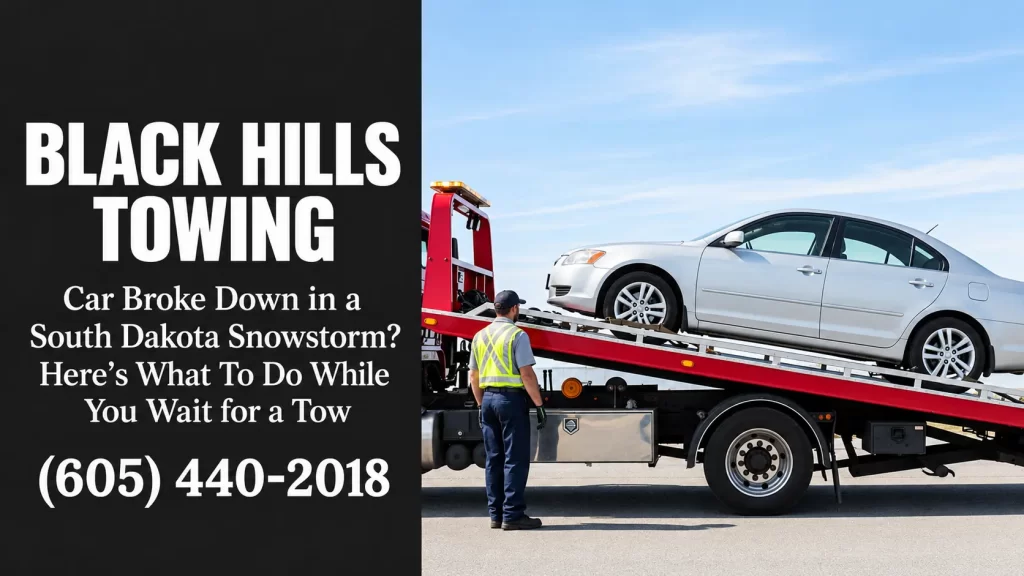
There’s a specific kind of panic that sets in when your car stalls out on I-90 during a snowstorm, hazards blinking, snow piling on the windshield faster than you can think straight. If that’s where you are right now, here’s what actually matters in the next few minutes, and what to expect once help is on the way.
Get Safe First, Then Worry About the Car
A disabled vehicle on a South Dakota highway in winter is a hazard to you and to everyone else on the road. Visibility drops fast in a snowstorm, and other drivers may not see you until they’re right on top of you.
Do this immediately:
- Turn on your hazard lights the moment you realize you’re losing power or control
- Coast as far onto the shoulder as you safely can, away from the traffic lane
- If you have flares or reflective triangles, set them out behind the vehicle, but only if it’s safe to exit
- Stay buckled in and stay in the car unless there’s an immediate danger, like fire or floodwater
Once you’re off the roadway and your hazards are on, you’ve done the most important thing. Everything after this is about staying safe and warm until help arrives.
What To Check Before You Call For a Tow
Before you dial, take thirty seconds to look at a few basics. It won’t fix the problem, but it helps whoever answers the phone send the right kind of help the first time, instead of a truck that shows up and can’t solve it.
- Fuel gauge. Running out of gas in freezing temperatures is more common than people think, especially when a car has been idling for warmth longer than expected.
- Battery and dash lights. A dead battery in cold weather is one of the most frequent winter breakdown calls. If your dash went dark or the engine won’t turn over, that’s a strong sign.
- Tires. Blowouts and sidewall damage from ice-covered potholes happen often on South Dakota highways in winter. If you heard a bang or felt a pull to one side before stopping, note it.
- Warning lights or smoke. If anything on the dash lit up before you lost power, or if you smell anything burning, mention it when you call.
You don’t need to diagnose the problem yourself. Just having these details ready means a dispatcher can get the right equipment and the right expectations set before the truck even leaves the lot.
How Long You Can Safely Wait, and How To Stay Warm
Tow times can vary depending on how far out you are and how bad conditions have gotten, so knowing how to stay safe while you wait matters just as much as making the call.
- Run the engine sparingly, about 10 minutes every hour is usually enough to keep the cabin warm without running the tank dry, and crack a window slightly to avoid carbon monoxide buildup, especially if snow has piled up around the exhaust pipe.
- Layer up with anything in the car. Blankets, extra clothing, even floor mats under your feet can help hold in heat.
- Keep your phone charged. A car charger or a power bank is worth having in the glovebox all winter, not just for emergencies like this one.
- Stay visible. Keep hazards on the entire time, and if you have a bright cloth or reflective item, tie it to your antenna or side mirror so approaching plows and drivers see you sooner.
If you’re stranded somewhere with cell service, staying in touch with the towing company gives you a realistic sense of timing so you’re not guessing in the cold.
Why 24-Hour Towing Matters More in Rapid City Winters
Winter breakdowns don’t follow a schedule. They happen during a 6am commute in blowing snow, on a late-night drive back from Rapid City after visibility dropped, or in the middle of a storm that rolled in faster than the forecast predicted. A towing company that only answers calls during business hours isn’t much use when you’re stuck on the shoulder at midnight with the temperature dropping.
That’s exactly why Black Hills Towing LLC runs a genuine 24-hour emergency line for towing in Rapid City and the surrounding highways. Winter is when a dependable towing company matters most, not because storms are rare here, but because they’re not.
What Happens When You Call Black Hills Towing
Calling in the middle of a snowstorm is stressful enough without wondering what happens next. Here’s the short version: you tell us where you are and what’s going on with the vehicle, we get a truck dispatched that’s equipped for winter road conditions, and we keep you updated if timing shifts due to weather or road closures. Our trucks handle everything from a dead battery jump to a full tow, so you’re not stuck explaining the problem twice to two different companies.
If your breakdown involves something short of a full tow, like a dead battery, an empty tank, or a lockout in freezing weather, it’s worth knowing that roadside assistance can often get you back on the road faster than a full tow would. Fuel deliveries and jumpstarts are common winter calls, and they’re usually quicker to resolve than people expect.
Save This Number Before You Need It
The best time to save a towing company’s number is before the storm, not during it. If you drive I-90 or the highways around Rapid City regularly through the winter months, keep our line saved in your phone now.
If you’re stranded and reading this in the middle of a storm, don’t wait it out hoping conditions improve on their own. Contact us or call our Rapid City line directly, and we’ll get a truck headed your way.